


Delta State News
Delta Workers Get 13th-Month Salary as Oborevwori Signs Law

Delta State Governor, Rt. Hon. Sheriff Oborevwori, has signed the Thirteenth Month Salary Law, 2026, into law, introducing a new welfare benefit for eligible public servants in the state.
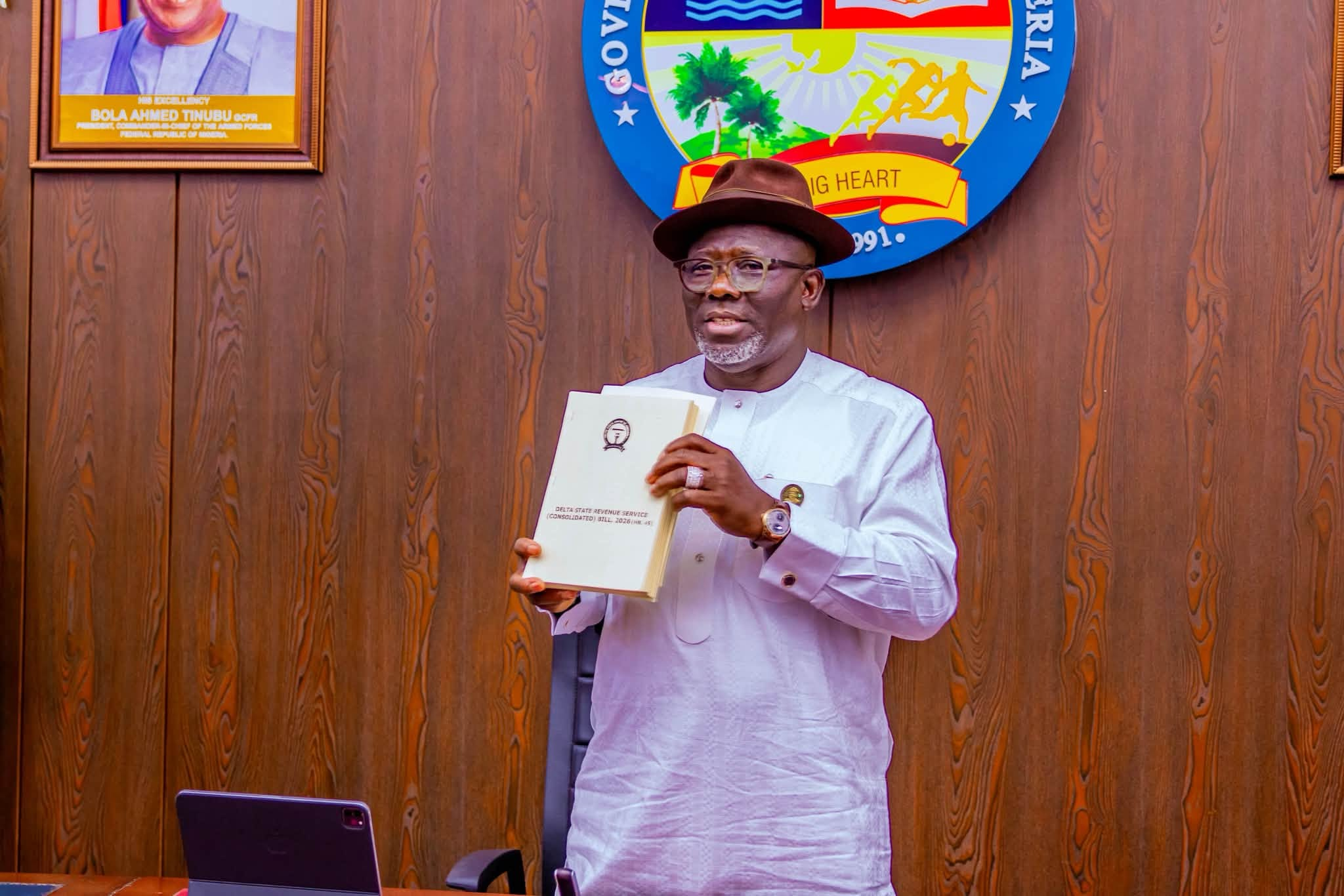
The governor signed the law alongside four other bills at the Executive Council Chambers, Government House, Asaba, on Wednesday, describing the legislation as part of his administration’s ongoing reforms under the MORE Agenda.
Oborevwori said the Thirteenth Month Salary Law was designed to boost workers’ morale, reward their contributions to the state and enhance productivity.
The governor said his administration was committed to implementing policies that would improve the lives of residents, stressing that development should go beyond physical infrastructure to include measures that directly affect the welfare of the people.
The new law was presented to the governor by the Speaker of the Delta State House of Assembly, Rt. Hon. Emomotimi Guwor, who said the legislation provides for the 13th-month salary benefit for eligible public servants in the state.
The Speaker said the law, alongside the other bills signed by the governor, would strengthen governance, improve public service delivery and promote the welfare of workers and residents.
Reacting to the development, the outgoing Delta State Head of Service, Dr. Mininim Oseji, described the Thirteenth Month Salary Law as a significant boost to workers’ welfare and family wellbeing.
Oseji said the policy would also stimulate business activities across the state, expressing appreciation to Governor Oborevwori for introducing what she described as a welcome development for workers and Deltans.
The signing of the law comes as the state government continues to pursue reforms aimed at improving public administration and strengthening economic activity in Delta State.
Other Laws Signed
In addition to the Thirteenth Month Salary Law, Governor Oborevwori signed amendments increasing the number of High Court judges from 46 to 50 and Customary Court of Appeal judges from nine to 12.
According to the governor, the judicial amendments are intended to strengthen the capacity of the courts and improve justice delivery across the state.
He also signed the Public and Private Properties Protection Amendment Law, which seeks to strengthen safeguards against unlawful occupation and destruction of public and private properties.
Another legislation signed by the governor was the Delta State Revenue Service (Consolidated) Law, 2026, which provides for the harmonisation of tax administration, curbs multiple taxation and is expected to create a more favourable environment for investment.
Oborevwori commended the Delta State House of Assembly for its role in passing the bills and urged relevant government agencies to ensure their effective implementation.
The signing ceremony was witnessed by senior government and judicial officials, including the Chief Judge of Delta State, Justice Tessy Diai, represented by Justice Briki Okolosi; the President of the Customary Court of Appeal, represented by Justice Tracy Uriah; Deputy Speaker of the House of Assembly, Rt. Hon. Arthur Akpowowo; principal officers of the Assembly; the Attorney-General and Commissioner for Justice; the Secretary to the State Government; commissioners and other senior government officials.