


Politics
Landlord-Tenant Bill Scales Second Reading in Delta Assembly

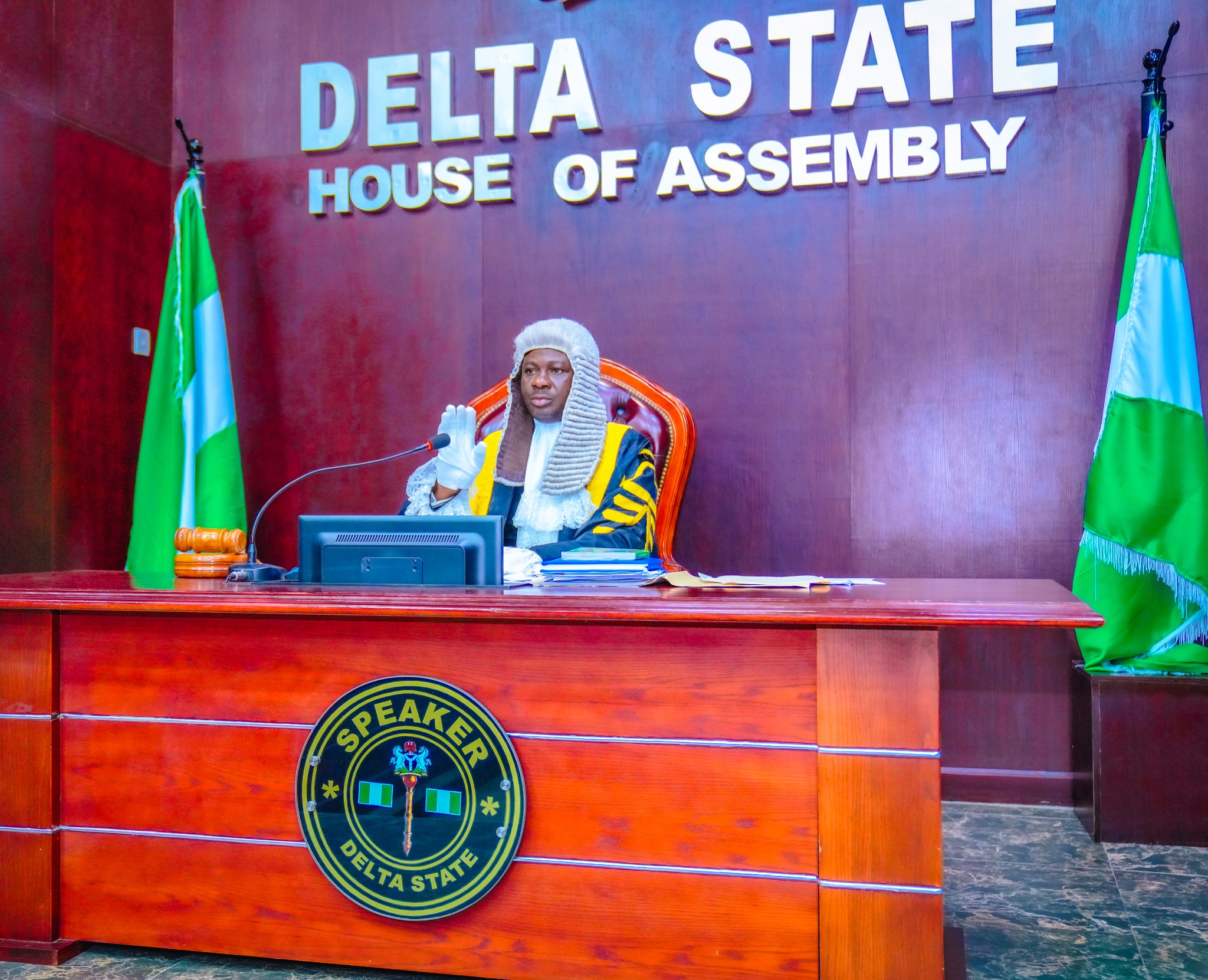
Lawmakers at the Delta State House of Assembly have passed the Delta State Landlord and Tenant Bill, 2025 (HB.36) through its second reading during plenary on Wednesday, October 8, 2025, at the Assembly Complex in Asaba.
The bill, sponsored by the Leader of the House, Hon. Emeka Emmanuel Nwaobi, Ph.D. (FNSE, FNICE, FICMC) JP, seeks to establish a fair, transparent, and legally guided framework governing the relationship between landlords, tenants, and agents across Delta State.
Moving the motion for the bill’s second reading, Hon. Nwaobi said the proposed legislation aims to protect both landlords and tenants from exploitation, while curbing the excesses of agents in the property sector.
“This bill is about fairness and order,” Nwaobi stated. “It ensures that landlords operate within the law, tenants are protected from undue exploitation, and agents act only within the limits of their authorization.”
Among its key provisions, the bill stipulates that no landlord shall increase rent by more than 50 percent, and such increments can only occur once every three years.
The proposed law also caps agency fees, mandating that no agent shall collect more than five percent (5%) of the total rent sum as commission.
Additionally, it provides that agents must act only to the extent duly authorized by the landlord, to ensure accountability and curb fraudulent practices in property management.
Supporting the motion, lawmakers including the Deputy Leader, Chief Whip, Deputy Speaker, and members representing Isoko South 2, Oshimili North, and Patani constituencies, among others, lauded the intent of the bill, describing it as timely, people-oriented, and progressive.
They emphasized that the proposed law would help promote harmony in landlord–tenant relations, prevent unfair rent practices, and bring greater structure and transparency to Delta State’s rental housing system.
After thorough deliberations, the House voted in favour of the bill’s progression. It was subsequently referred to the House Joint Committee on Housing, Urban Renewal, and Women Affairs and Humanitarian Support Services for further legislative scrutiny and stakeholder engagement.