


Delta State News
Oborevwori Unveils ₦1.23trn 2027 Budget, Earmarks 65% for Projects

Delta State Governor, Rt. Hon. Sheriff Oborevwori, has presented a proposed ₦1.236 trillion budget for the 2027 fiscal year, allocating approximately 65 per cent to capital projects.
Tagged Budget of Sustained Prosperity and Enhanced Growth, the proposal provides ₦806.8 billion for capital expenditure and ₦430 billion for recurrent spending.
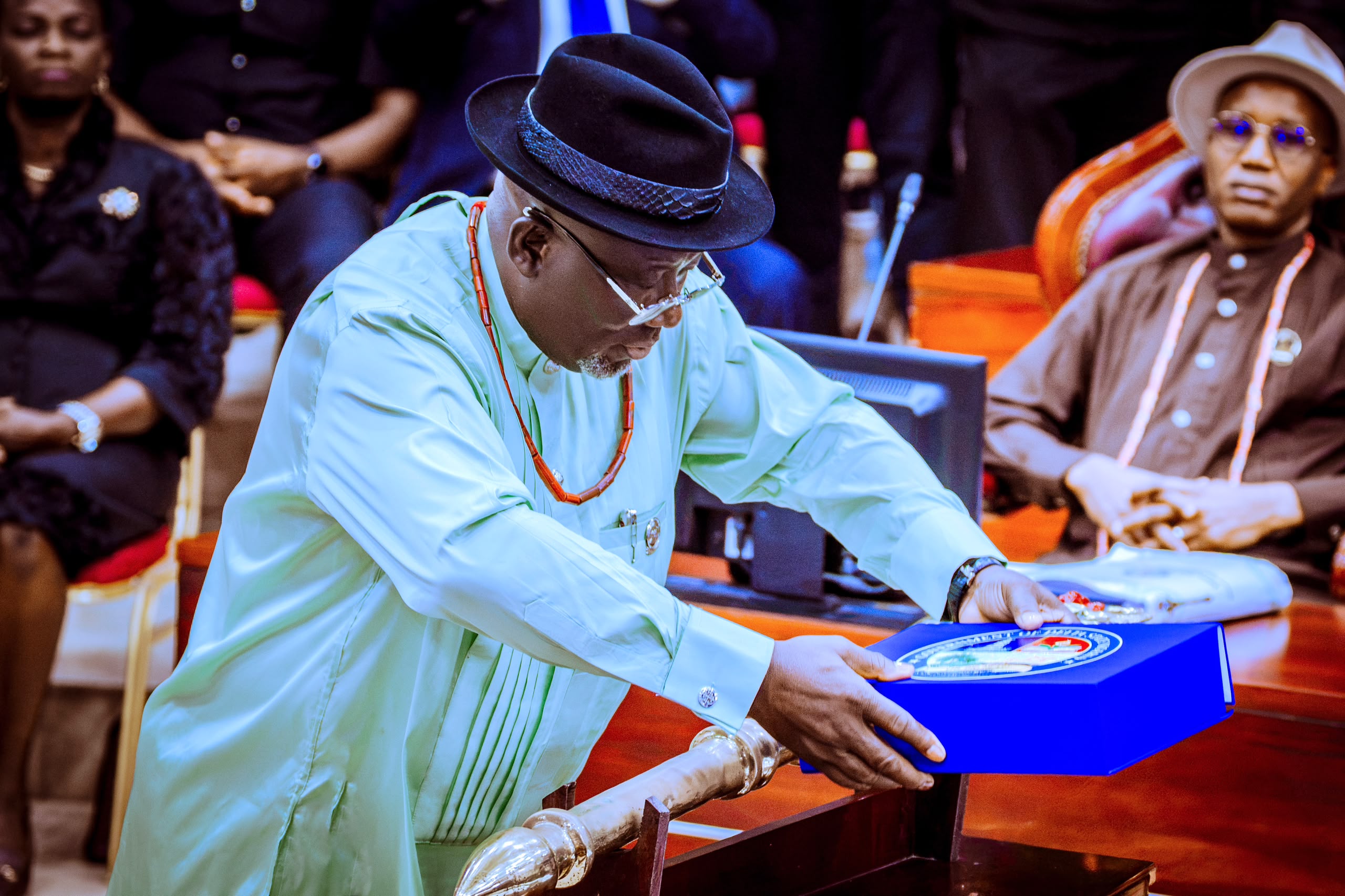
Oborevwori presented the budget to the Delta State House of Assembly in Asaba on Monday, November 16, 2026, during a sitting presided over by the Speaker, Rt. Hon. Emomotimi Dennis Guwor.
The governor said the proposal was designed to consolidate ongoing projects, stimulate economic growth and improve residents’ living conditions while maintaining fiscal discipline.
He explained that the proposed budget was ₦493.01 billion, representing a 28.5 per cent reduction from the ₦1.729 trillion approved for 2026, adding that the reduction reflected a more realistic approach to budgeting and spending.
On revenue generation, Oborevwori disclosed that Delta generated ₦209 billion in internally generated revenue (IGR), recorded 90 per cent budget performance and reduced its inherited debt from ₦463 billion to approximately ₦63 billion. He expressed confidence that the outstanding debt would be cleared by the end of the first quarter of 2027.
On infrastructure, the governor proposed ₦320 billion for the two Ministries of Works to sustain ongoing road projects and other developments. He disclosed that his administration had embarked on 872 road projects and 20 bridges and flyovers, covering 2,348 kilometres of roads and 1,871 kilometres of drainage infrastructure.
The budget also highlights ₦220 billion for road infrastructure, alongside ₦74 billion for education and ₦50 billion for healthcare.
The education allocation comprises ₦10 billion for primary education, ₦12 billion for technical education, ₦12 billion for secondary education and ₦40 billion for higher education. Oborevwori also disclosed that ₦10.8 billion had been approved for the rehabilitation and renovation of primary and secondary schools.
For healthcare, the proposed ₦50 billion will support hospital upgrades, medical supplies, recruitment and welfare of health personnel. He also highlighted the College of Health Technology, Ovrode, which has enrolled more than 800 pioneer students.
The governor further announced a ₦50 billion local government intervention fund, providing ₦2 billion to each of the state’s 25 local government areas for community development.
Other allocations include ₦20 billion for the Delta State Capital Territory Development Agency, ₦20 billion for the Warri-Uvwie and Environs Development Agency, ₦12 billion for energy, ₦10 billion for urban and physical planning, and ₦5 billion each for agriculture and social interventions.
On economic diversification, Oborevwori cited the $70 million Olam Agri animal feed mill project at Ogwashi-Uku as one of the investments attracted following the 2026 Delta State Economic and Investment Summit. He said the project would create jobs and provide a market for locally produced agricultural commodities.
He also disclosed that Delta’s Gross Domestic Product (GDP) increased from ₦14.5 trillion in 2024 to approximately ₦17.9 trillion in 2025, making it Nigeria’s fifth-largest state economy.
On workers’ welfare, the governor announced that he had assented to the 13th-month salary bill for public servants, with implementation commencing in December 2026.
He added that his administration was strengthening security through collaboration with security agencies, approval for 25 police divisional headquarters for state police and an application to recruit 1,000 forest guards.
Oborevwori said the 2027 budget would sustain the administration’s MORE Agenda, with priorities including infrastructure, economic diversification, human capital development, security and support for vulnerable residents.
He subsequently presented the Appropriation Bill for consideration and approval. The motion was moved by the House Leader, Hon. Emeka Nwaobi, and seconded by Hon. Marilyn Okowa-Daramola.
Earlier, Speaker Guwor commended the governor’s achievements in infrastructure, education, healthcare and workers’ welfare, particularly the approval of the 13th-month salary.
He reaffirmed the Assembly’s commitment to supporting the budget and disclosed that the bill would be taken for second reading on Tuesday, November 17, 2026.