


News
Prerogative of Mercy: Tinubu Grants Clemency and Pardon to 34 Convicts (see list)

By Lawrence Oyibo
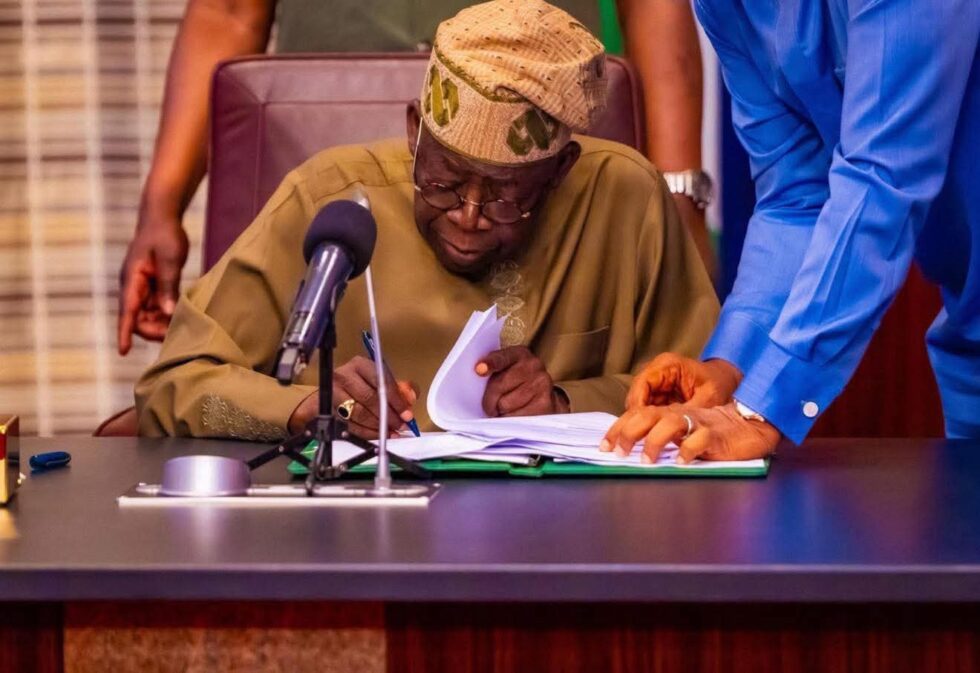
President Bola Ahmed Tinubu, GCFR, has officially signed and executed multiple instruments of clemency, pardon, and commutation of death sentences to life imprisonment, exercising his constitutional powers of Prerogative of Mercy under Section 175 (1) & (2) of the 1999 Constitution of the Federal Republic of Nigeria (as amended).
The move, confirmed through documents titled Instrument of Presidential Prerogative of Mercy (Grant of Pardon, 2025), Instrument of Presidential Prerogative of Mercy (Grant of Clemency, 2025), and Instrument of Presidential Prerogative of Mercy (Commutation of Death Sentence to Life Imprisonment, 2025), was made on October 21, 2025, in Abuja.
Clemency, Pardon, and Sentence Commutation
According to the signed instruments, the President approved clemency and pardon for a total of 34 individuals, including prominent historical and contemporary figures.
Those Granted Pardon Include:
1. Mrs. Anastasia Daniel Nwaobia
2. Barr. Hussaini Alhaji Umar
3. Ayinla Saadu Alanamu
4. Hon. Farouk M. Lawan
5. Herbert Macaulay
6. Major General Mamman Jiya Vatsa
7. Ken Saro-Wiwa
8. Saturday Dobee
9. Nordu Eawo
10. Daniel Gbooko
11. Paul Levera
12. Felix Nuale
13. Baribor Bera
14. Barinem Kiobel
15. John Kpuine
Those Granted Clemency Include:
1. Oroka Michael Chibueze
2. Adesanya Olufemi Paul
3. Daniel Bodunwa
4. Hamza Abubakar
5. Buhari Sani
6. Mohammed Musa
7. Muharazu Abubakar
8. Ibrahim Yusuf
9. Saad Ahmed Madaki
10. Ex-Corporal Michael Bawa
11. Richard Ayuba
12. Adam Abubakar
13. Emmanuel Yusuf
14. Chinedu Stanley
15. Johnny Ntheru Udor
Commutation of Death Sentences to Life Imprisonment:
1. Emmanuel Baba
2. Abubakar Usman
3. Khalifa Umar
4. Mohammed Umar


Rationale and Review Process
In a statement issued by Bayo Onanuga, Special Adviser to the President on Information and Strategy, President Tinubu emphasized that the decision followed consultations with the Council of State and extensive public input, ensuring that the final list reflects justice, fairness, and national security considerations.
According to the Presidency, individuals convicted of serious offences — including kidnapping, human trafficking, armed robbery, drug-related crimes, fraud, and unlawful firearms possession — were excluded from the final list due to the gravity of their offences and the potential security implications.
“This action became necessary in view of the seriousness of some offences, the need to be sensitive to the victims and society at large, and to uphold the morale of law enforcement agencies,” the statement read.
Adding that, “Justice, as the President noted, is a three-way traffic — balancing the rights of the accused, the victim, and the State.”
The approved list has been transmitted to the Nigerian Correctional Service (NCoS) for immediate implementation.
Reforms in the Clemency Process
In a major policy shift, President Tinubu also ordered the relocation of the Secretariat of the Presidential Advisory Committee on Prerogative of Mercy from the Federal Ministry of Special Duties to the Federal Ministry of Justice.
The President further directed the Attorney-General of the Federation (AGF) and Minister of Justice to issue new operational guidelines for future exercises of the Prerogative of Mercy. These guidelines will mandate consultation with prosecuting agencies such as the EFCC, ICPC, NDLEA, and the Nigerian Police Force before any recommendation is approved.
This reform aims to promote transparency, accountability, and public confidence in the justice system.
Public Reaction and Historical Context
The inclusion of names such as Ken Saro-Wiwa, Barinem Kiobel, and Baribor Bera — executed in 1995 under the Sani Abacha regime — has drawn nationwide attention, symbolizing a long-overdue gesture of national reconciliation and posthumous justice for the Ogoni Nine environmental activists.
Similarly, the clemency extended to figures like Major General Mamman Jiya Vatsa, executed in 1986, and Herbert Macaulay, Nigeria’s pre-independence nationalist, underscores what many observers describe as a blend of symbolic pardon and historical correction.
Tinubu Reaffirms Commitment to Justice Reform
President Tinubu reaffirmed his administration’s commitment to judicial reforms, prison decongestion, and a more humane correctional system.
“We are building a justice system that balances mercy with accountability,” he said. “Our goal is a fair, transparent, and reformed system that strengthens faith in the rule of law.”