


Celebrities
‘A Visit Is Not an Endorsement’ – Tunde Onakoya Reacts to Critics

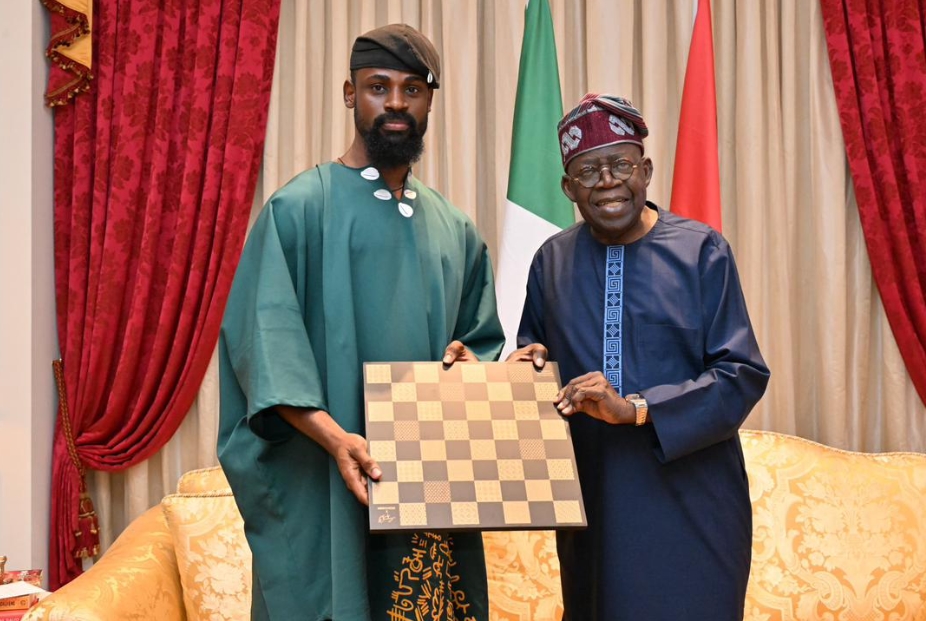
Nigerian chess champion and founder of Chess in Slums Africa, Tunde Onakoya, has addressed the wave of criticism that followed his recent visit to President Bola Tinubu, clarifying that his engagement was not politically motivated but rooted in his long-standing mission to empower disadvantaged youth through education and chess.
Onakoya, who was recently honoured by the City of New York after breaking a Guinness World Record, emphasized that recognition from the highest office in his home country does not equate to political alignment.
“I’ll say a few things. The anger, the hate, the love, the applause, the criticism – all of it is valid and I embrace it. I am a world record holder, which means I have attained something no one else in the world has ever done. I was recently honoured and awarded by the City of New York,” he wrote in a strongly worded statement on X (formerly Twitter) on Wednesday.
“To be honoured and received by the President and the highest office in my own country, for this reason, is not a crime. (It is not even a national honour, by the way.)
I have declined many awards. Comparing me to people who have received awards and recognition from countries that have committed war crimes is, at best, laughable.”
Onakoya reaffirmed his apolitical stance, adding that his commitment to youth development through his organisation requires non-partisanship.
“I have no interest in partisan politics because of the sensitivity of the work that I do. If that ever changes, then I would resign my role as CEO of Chess in Slums Africa.”
He also challenged the notion that his initiative thrives only because of governance failures, describing the work of Chess in Slums Africa as a cognitive and educational intervention rather than a charitable gesture.
“The rhetoric that Chess in Slums only exists or is relevant because of bad governance is not accurate. The real impact of our work is in the synapses. We’re using chess as a tool to teach cognition and improve academic outcomes. Using it as a social intervention tool is because those children have fallen through the cracks and cannot make it to the classrooms. This is not charity or ‘NGO’.”
“What most of you measure as the most tangible impact is us just dignifying the stories of the children you see all the time on the streets but pay no attention to. The real impact here is ensuring they have the critical capacity to think for themselves and putting them through formal or vocational education.”
Onakoya explained that his work with global educational institutions and tech companies ensures continued relevance, and he remains committed to channeling any influence or resources into tangible improvements for underserved children.
“I continue to consult with educational institutions and tech companies around the world, so my work will always be relevant, and whatever resources or influence that gives me, I will use all of it to serve the children who deserve a place in the world as well.
A visit is not an endorsement. I will visit many more people and will continue to sell my chess boards.”
He acknowledged the diversity of public opinion but urged people not to conflate online perception with real character.
“You may not understand my intentions or character because the only thing you know about me is what I let on social media. But reputation is not character. It’s been ten long years of staying with this one thing, so I know for a fact that I have earned the benefit of the doubt.”
“Again, I embrace the love and the hate. But I care for none of it. In a decade or two, the Chess/STEM institute will stand, and it will be a place where thousands of children will dream again and be educated in a way that makes them valuable to the world. All the strong opinions we have now will fall flat in the face of this.”
Onakoya also clarified that Chess in Slums Africa has never received international grants. Much of its progress, he said, has come from local partnerships and grassroots support, including a collaborative effort with the Lagos State Government.
“Finally, I appreciate everyone who has ever supported the incredible work we’ve done in the last seven years. We have never applied for or received any international grants in this time.
We’ve been working with the Lagos State Government for about a year now to take kids from Jakande and Isale Eko off the streets. One of them recently graduated from furniture school and is living again. Our collective hurt is valid and we may disagree on politics, but there are actual lives at stake and we all have a role to play, in whatever capacity, to stop this haemorrhage. Yes, we will partner with the government to scale this impact and institutionalise it so Tunde stops being the hero of the story. It’s your tax, anyway.”
In closing, he reaffirmed his long-standing commitment to Nigeria’s youth and said he will continue taking actions that may be misunderstood but are always driven by the same purpose.
“Finally, I’d say this: my fight is different. I’m not on the fence. I took a stand ten years ago for the country I want to see.
The truth is, I will do many more things that may challenge your perception of me, but I know my heart is in the right place and whatever rooms my vision gives me access to, I will put the dreams and needs of the children first. I live for the audience of one, and that is enough.”