


Health
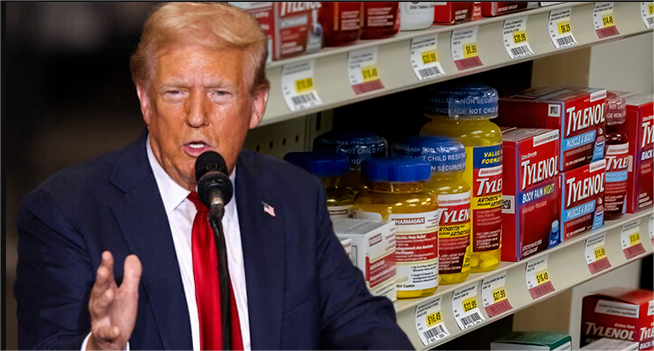
Trump Claims Tylenol in Pregnancy Raises Autism Risk

US President Donald Trump has stirred controversy after linking the use of Tylenol during pregnancy to autism, despite a lack of scientific evidence supporting such claims.
Speaking during a White House health briefing on Monday, Trump urged pregnant women to “tough it out” and avoid acetaminophen, the main ingredient in Tylenol, insisting it could harm unborn babies. He further suggested revising standard childhood vaccine schedules, echoing long-standing anti-vaccine rhetoric.
Medical experts swiftly condemned his remarks as dangerous and misleading. The American College of Obstetricians and Gynecologists has consistently maintained that acetaminophen is one of the safest pain relievers during pregnancy when taken as directed.
“Taking Tylenol is not good. Fight like hell not to take it,” Trump said, claiming only extremely high fevers would justify its use. However, doctors warn untreated pain and fever can be harmful to both mother and child.
Arthur Caplan, head of NYU’s medical ethics division, criticized Trump’s comments as “dangerous and unscientific,” warning they could cause guilt and confusion among pregnant women. “No one should feel unethical for following medical guidance and treating a fever,” he said.
The US Food and Drug Administration (FDA) issued a more measured response, stating that no causal link between Tylenol use in pregnancy and autism has been established, though ongoing research continues to evaluate potential risks. A recent review suggested a possible association but stressed that further studies are needed.
Trump also reignited debate around vaccines, repeating discredited claims about their role in autism and suggesting an overhaul of the Hepatitis B vaccine schedule for infants — a move that contradicts decades of medical consensus. Pediatric groups warned such measures could leave children vulnerable to preventable diseases.
Experts, including the American Academy of Pediatrics, have cautioned that spreading misinformation about widely used medicines and vaccines risks undermining public health.
CHANNELS